
Kineton C of E Primary School
OPAL

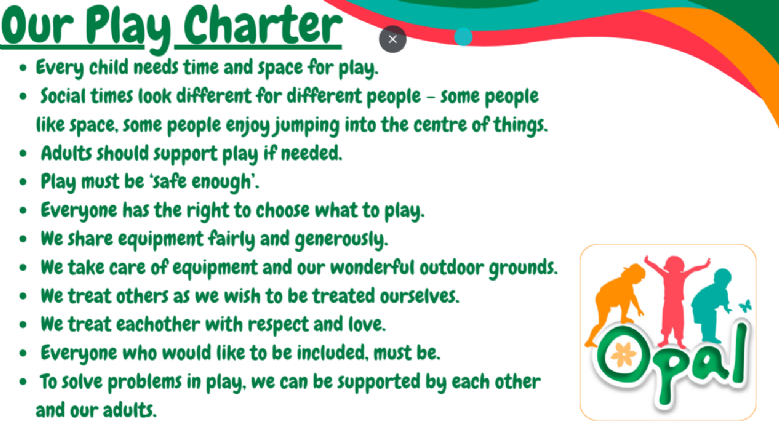
We are proud to be bringing our vision for OPAL to life. Over the last 18 months, we have been excited to be working with teachers, parents, Governors and the children to develop and realise a clear and strategic plan to ensure ‘amazing play, every day, for every child’. Our play charter written by our school parliament, outlines our commitment to play and how we bring this to life everyday.
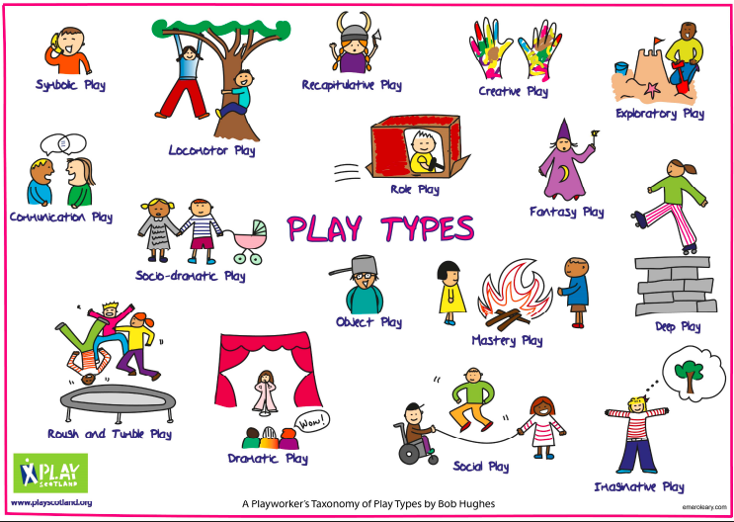
We recognise the importance of play to every child’s physical and mental wellbeing and are determined to transform play for all the children at Kineton. We recognise that everyone enjoys playing in different ways and this is celebrated in the 16 play types. Through the range of opportunities we offer, we aim to provide children with all of these types.
Talking about Play
Following surveys of pupils, we have introduced a whole range of enhancements including bikes, scooters, pogo sticks, slack lines, den building, music, a mud kitchen, stage, sandpit, small world play spaces and a quiet, art zones. Our monthly OPAL Assemblies celebrate great play, introduce new equipment and resources and remind the children of any rules and expectations.
OPAL Assembly 1 23.1.25 by missjsmitchThe Importance of Play
Play is defined as a process that is intrinsically motivated, directed by the child and freely chosen
by the child. Play has its own value and provides its own purpose. It may or may not involve equipment or other people.
We believe play has many benefits, including
● Play is critical to children’s health and wellbeing, and essential for their physical, emotional, social, spiritual and intellectual development.
● Play enables children to explore the physical and social environment, as well as different concepts and ideas.
● Play enhances children’s self-esteem and their understanding of others through freely chosen social interactions, within peer groups, with individuals, and within groups of different ages, abilities, interests, genders, ethnicities and culture
● Play requires ongoing communication and negotiation skills, enabling children to develop a balance between their right to act freely and their responsibilities to others.
● Play enables children to experience a wide range of emotions and develop their ability to cope with these, including sadness and happiness, rejection and acceptance, frustration and achievement, boredom and fascination, fear and confidence
● Play encourages self-confidence and the ability to make choices, problem solve and to creative.
● Play maintains children’s openness to learning, develops their capabilities and allows them
to push the boundaries of what they can achieve.
Aims
●Allow children to take risks and use a common-sense approach to the management of
these risks and their benefit
●Ensure play settings provide a varied, challenging and stimulating environment.
● Provide opportunities for children to develop their relationships with each other.
● Enable children to develop respect for their surroundings and each other.
● Aid children’s physical, emotional, social, spiritual and intellectual development.
● Provide a range of environments that will encourage children to explore and play
imaginatively.
● Provide a range of environments that will support children’s learning across the curriculum
and learning about the world around them.
● Promote independence and teamwork within children.
● Build emotional and physical resilience.
How Can Parents Help?
Play is not messing about but is the process that enables children to learn all of the things that cannot be taught, while also feeling like it is fun. There are certain things children need have in order to be able to play. These include:
- Having clothes that you can play in
- Having things to play with
- Having a certain amount of freedom
As we offer such a range play opportunities for your children, we will be asking you for resources and are making changes about how the children use the school grounds. We will be looking to maintain our stocks of loose parts to ensure we have an ongoing collection of high quality loose parts. If you have any of the following items that you no longer require, please drop them in to the office.

The experiences we are fostering are essential for children’s physical and mental well-being and health and in line with all current good practice advice on health and safety, well-being and development.
In order for children to maximise these opportunities, children are required to have their own pair of wellies in school, come to school prepared for the weather including having hats and suncream in the summer and waterproof clothing in the winter.
Managing Risk
‘Play is great for children’s wellbeing and development. When planning and providing play
opportunities, the goal is not to eliminate risk, but to weigh up the risks and benefits. No child will
learn about risk if they are wrapped in cotton wool.’
Managing Risk in Play Provision: An Implementation Guide (Play Safety Forum, 2012)
The school will use the Health and Safety Executive guidance document Children’s Play and
Leisure – Promoting a Balanced Approach (September 2012) as the principal value statement
informing its approach to managing risk in play. In doing so, the school will adopt a risk-benefit
approach as detailed in Managing Risk in Play Provision: An Implementation Guide (Play Safety
Forum, 2012).