Kineton C of E Primary School
English
The Stour Federation Reading Progression
The Stour Federation Tier 2 Vocabulary Progression
The Stour Federation Writing Progression
7 Top Tips to Support Reading at Home
English Intent
At KPS, we instil a love of reading and active development of vocabulary through exposure to a range of high-quality texts. We equip pupils with a strong command of the English language to enable them to speak, read and write confidently, creatively, fluently and accurately, enabling them to be effective communicators.

.jpg)

Reading After Phonics
When children have completed their Read Write Inc. phonics learning and are assessed as being speedy, fluent readers, they move on to the next step of their reading journey. Typically, this happens during their time in Year 2. Children then move on to using Accelerated Reader to assess and guide their independent reading. So, how does it work?
.png)
Step 1. Children complete a termly Star Reader test. This test is completed on iPads and adjusts automatically depending on the success rate of the child completing the quiz. At the end of the quiz, each child has earned their ZPD (zone of proximal development) score.
Step 2. This score guides which books children may select from the library to ensure that they are being challenged at the correct level.
Step 3. When the child completes the book, they complete a digital quiz which assesses their comprehension of what they have read. Success in quizzes earns children points and each child has a personalised target to reach each term, which is based on their ZPD and the amount of time they should be reading.
Step 4. Teachers carefully monitor children’s progress through tracking how often they are reading and their success in quizzes.
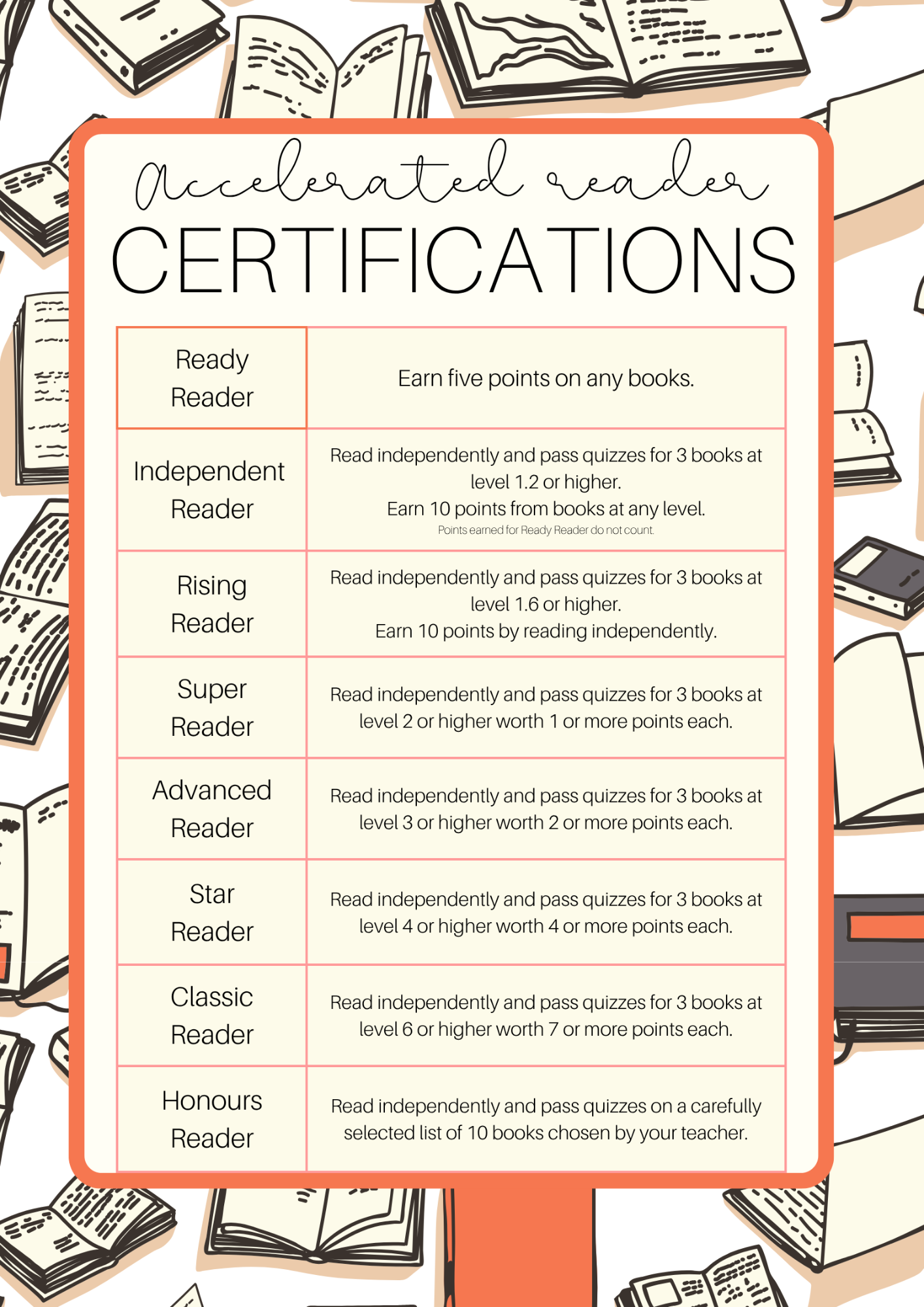
As well as striving to meet their targets, children can also earn certifications for different reading achievements. See below.
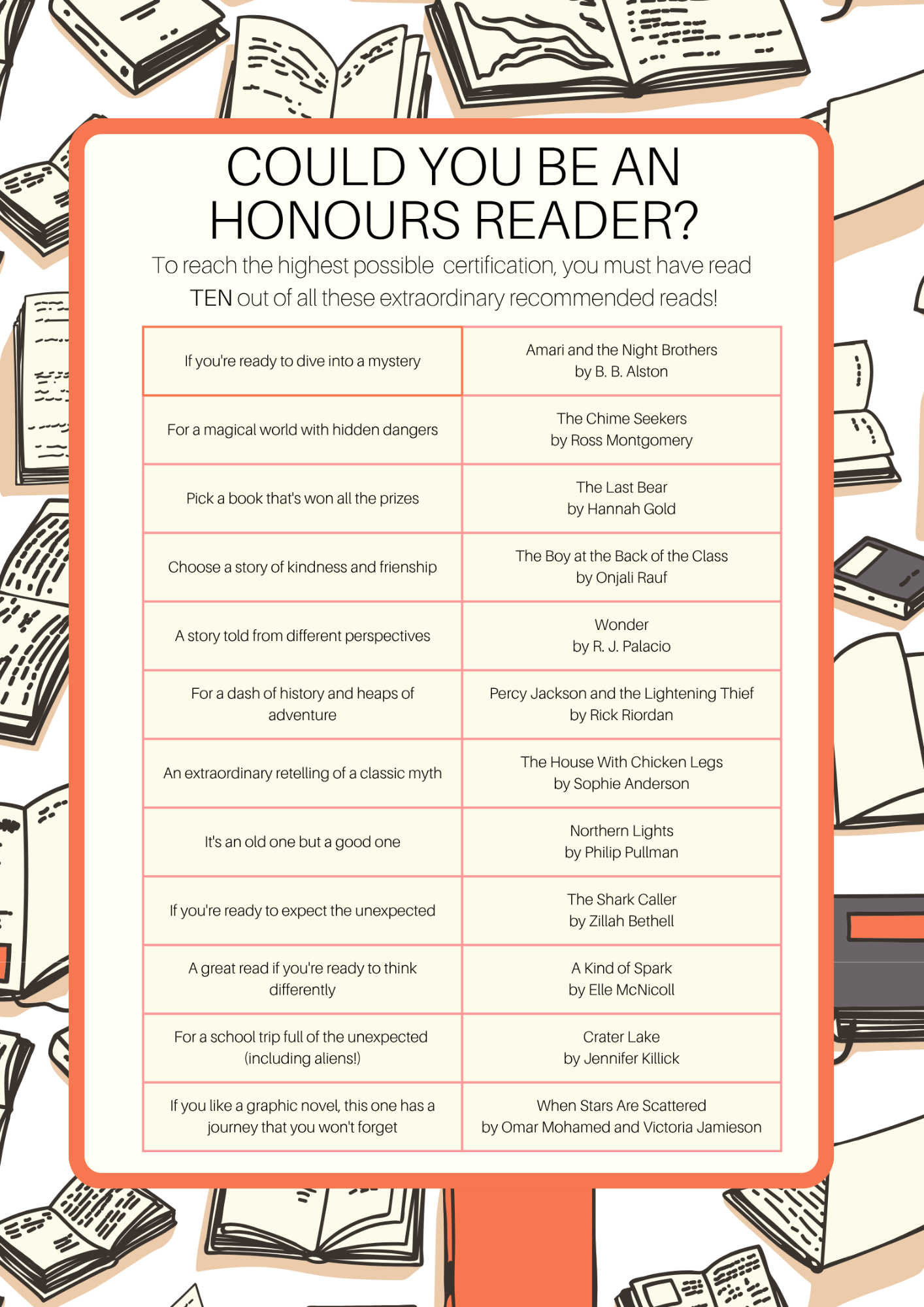
The most prestigious certification is Honours Reader. To achieve this, children must have read 10 of the 12 books listed below.
Children who read half a million or 1 million words across the school year are rewarded with certificates and badges in our Believe Grow Achieve worship. Some children in Key Stage 2 have even earned Double Millionaire and Triple Millionaire awards.
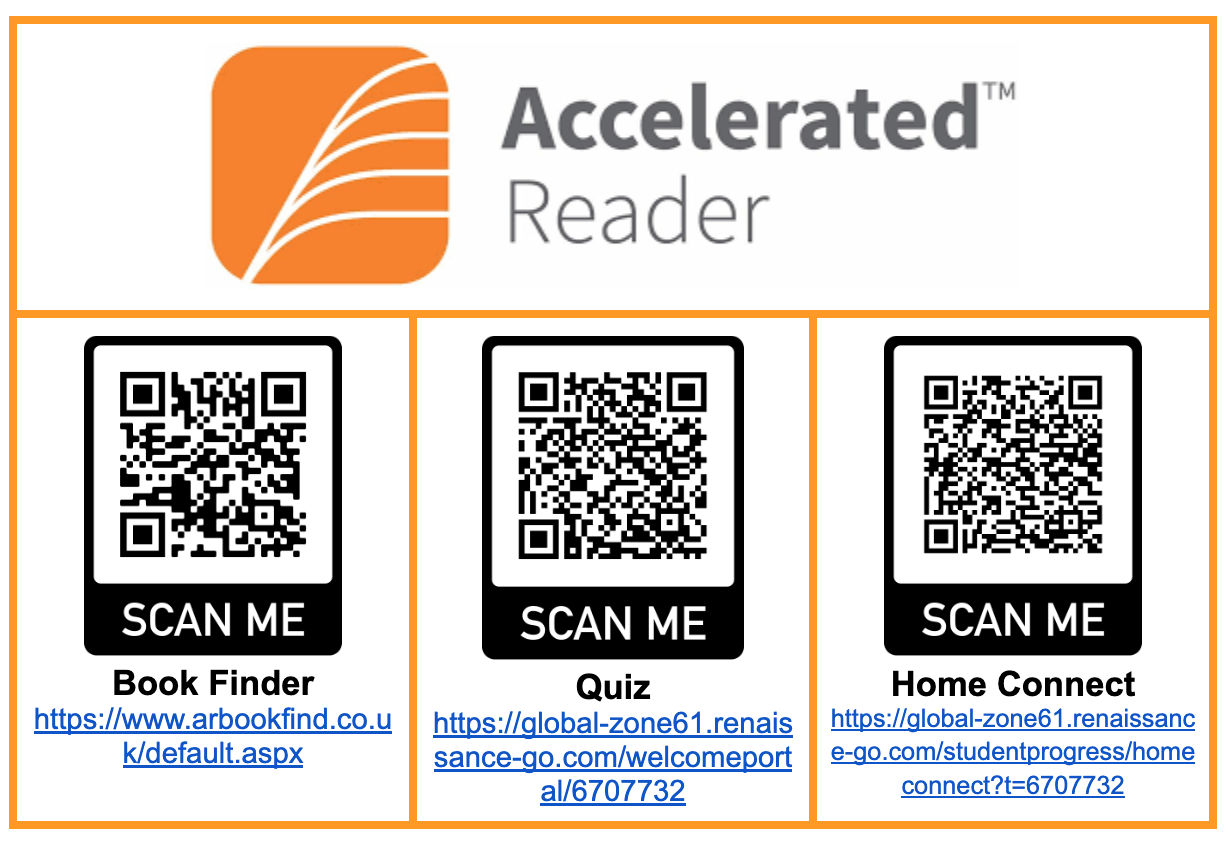
For more details, see our Accelerated Reader parent guide:
Reading Lessons
In Key Stage 2, reading continues to be fundamental in all areas of the curriculum. Children have 3 weekly reading lessons, continuing to focus on reading fluency but with core attention being on developing comprehension skills.
Lesson 1 – children answer questions about their class text, focussing on skills such as inference, prediction and retrieval.
Lesson 2 – children read and interpret an unseen text. This might be a story extract, a poem, a newspaper article, a page from a non-fiction book or a number of other things.
Lesson 3 – children focus on explicit vocabulary learning. 3 words are taught to children (including definition, word class, use in context). 1 of these words is a tier 2 word (challenging words which appear in a variety of contexts) and 2 challenging words from their class text.
Story Time
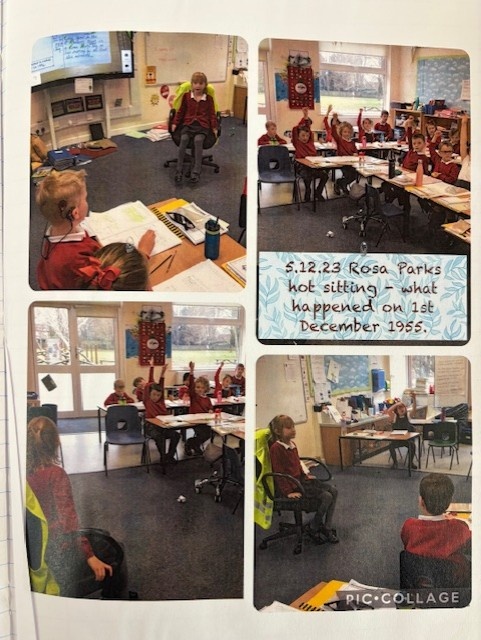
Sharing a love of reading is fundamental to our core purpose in English. Children are exposed to a wide range of texts across the curriculum. A highlight of everyone’s day in story time, in which the class teacher reads to the children. The children sit back and enjoy the adventures. These texts also feed into our writing and reading lessons.
The texts for each class are shown below:
|
|
Autumn 1 |
Autumn 2 |
Spring 1 |
Spring 2 |
Summer 1 |
Summer 2 |
|
Year 1
|
The Colour Monster Traction Man |
That Rabbit Belongs to Emily Brown Little Red Riding Hood |
The Big Book of the UK |
The Queen’s Hat |
Beegu Whiffy Wilson - The Wolf Who Didn’t Want to Go to School |
The Tiger Who Came to Tea Meerkat Mail |
|
Year 2
|
Rosa Parks – Little People, Big Dreams |
Counting on Katherine |
The Pirate Cruncher Clean Up! |
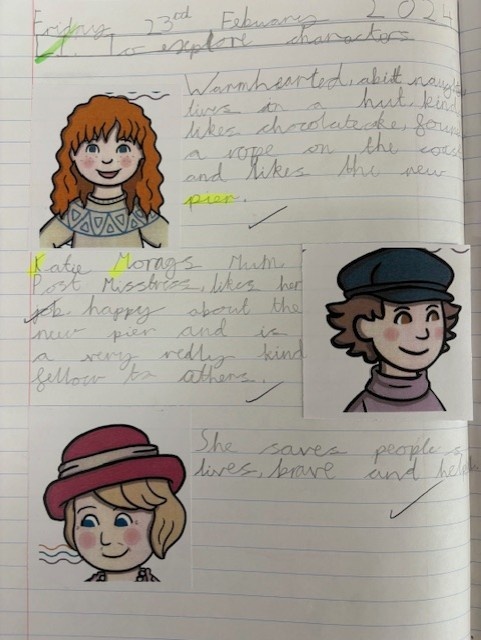
Katie Morag and the New Pier |
Queen Victoria’s Bathing Machine The Paperbag Princess |
The King of Tiny Things |
|
Year 3 |
The Wild Way Home |
Grimwood |
The Firework Maker’s Daughter |
Escape from Pompei |
The House at the Edge of Magic |
How to Train Your Dragon |
|
Year 4 |
The Land of Roar |
The Boy at the Back of the Class |
When the Mountains Roared |
The Girl Who Stole an Elephant |
Secrets of a Sun King |
The Boy Who Stole the Pharoah’s Lunch |
|
Year 5
|
Cosmic |
Kai and the Monkey King |
The Lion, the Witch and the Wardrobe |
Mama Miti: Wangari Maathai and the Trees of Kenya |
Who Let the Gods Out? |
Leo and the Gorgon’s Curse |
|
Year 6 |
Pig Heart Boy
|
Freedom |
The Wolf Wilder |
Shackleton's Journey |
Letters from the Lighthouse |
The Midnight Guardians |
Recommended Reads
BooksForTopics provide a brilliant range of books suggestions suitable for readers in each year group.
Writing
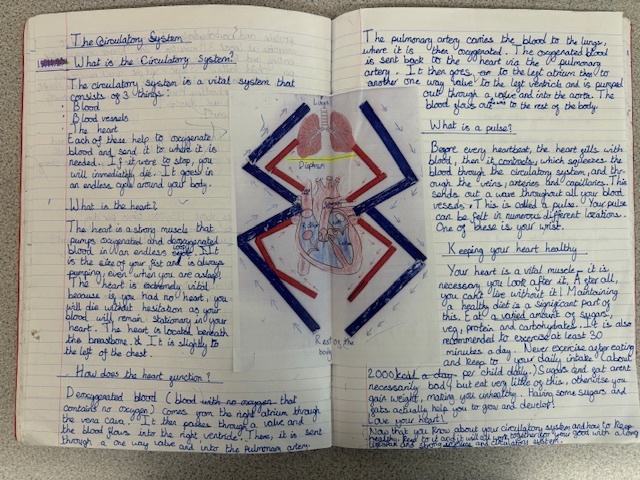
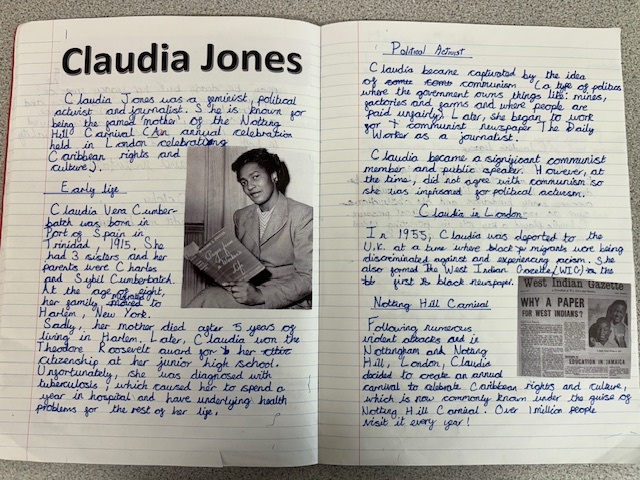
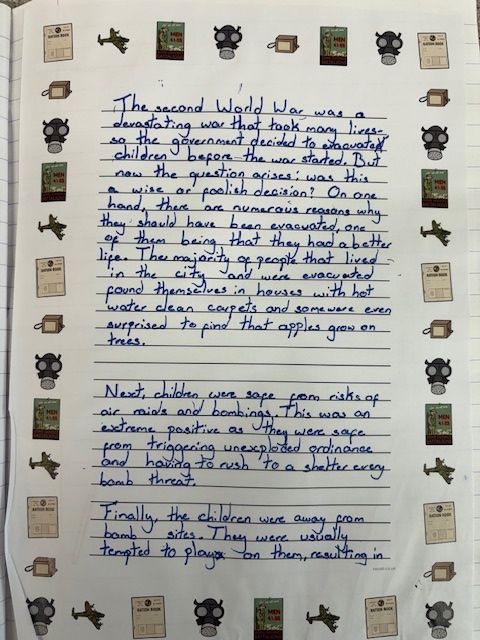
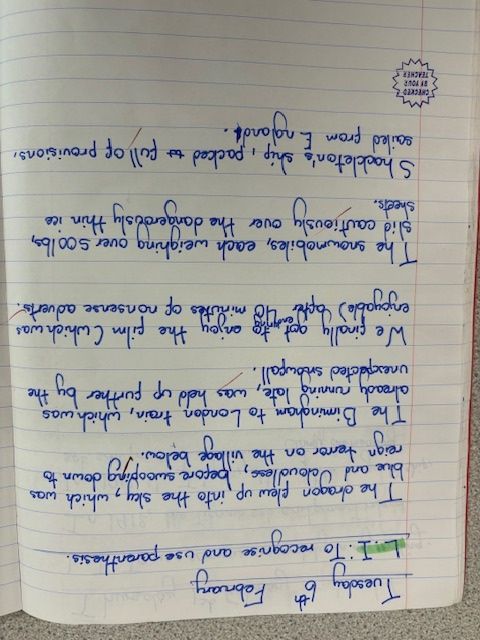
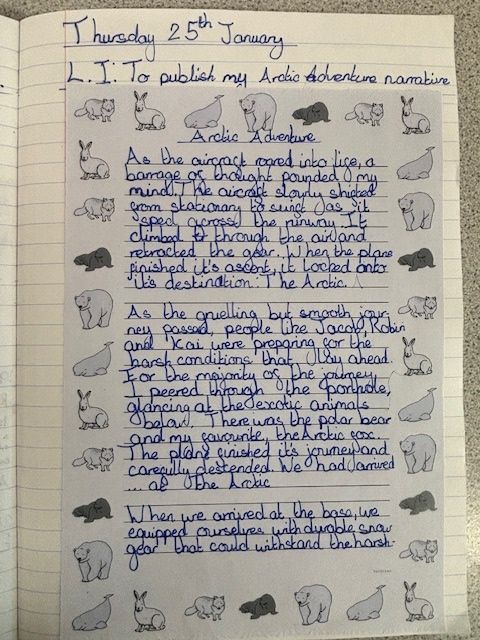
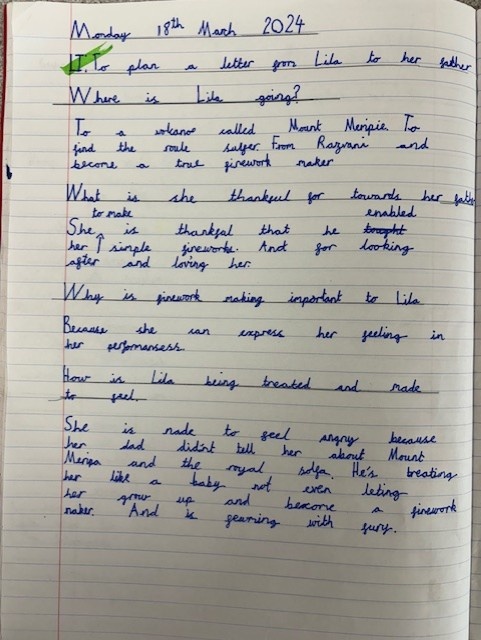
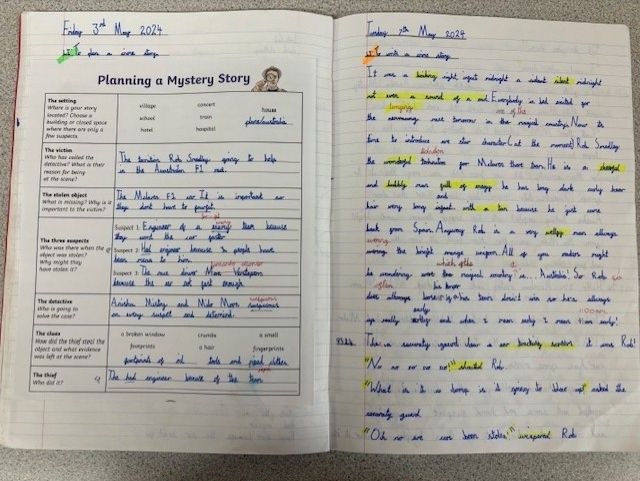
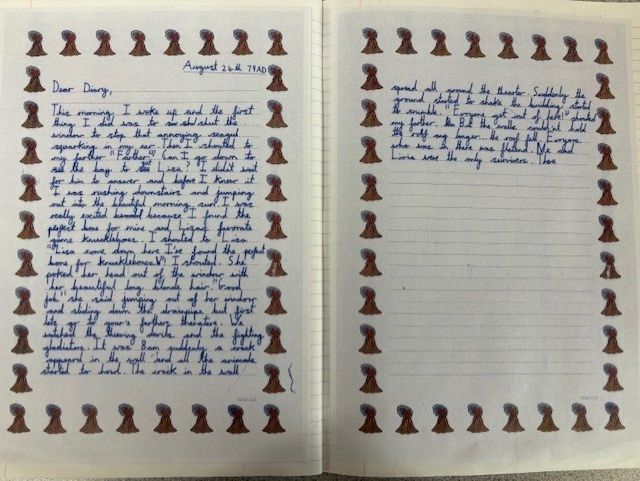
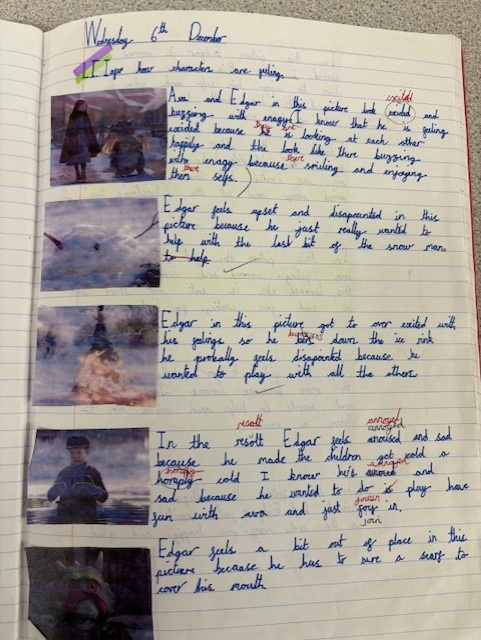
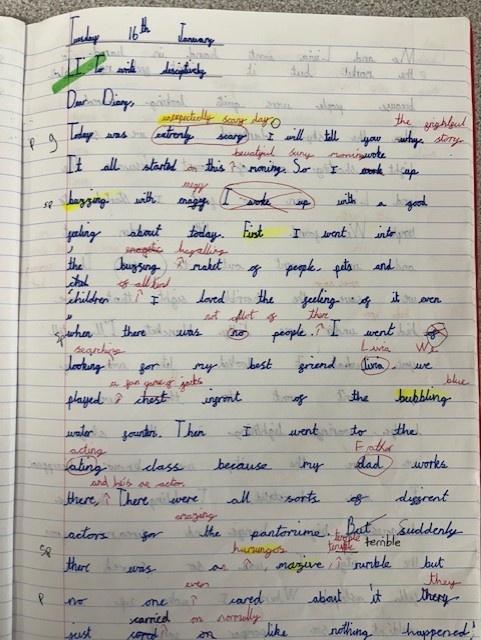
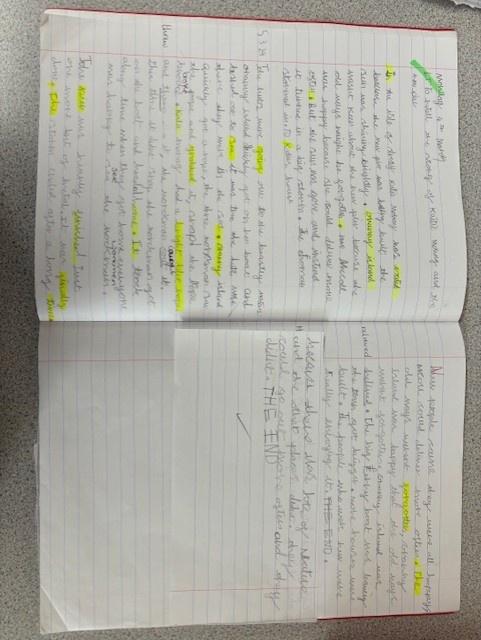
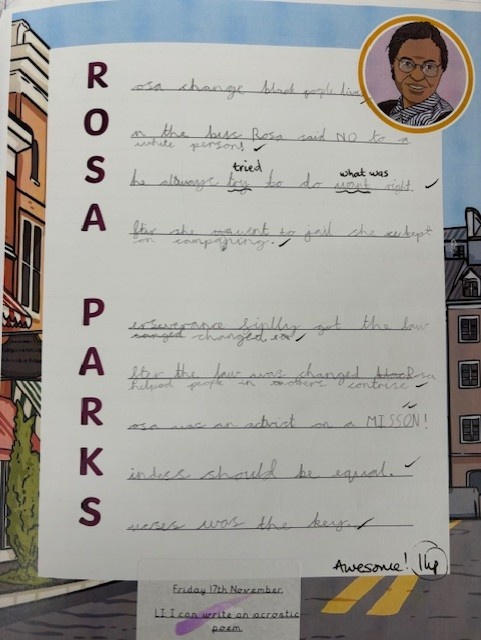
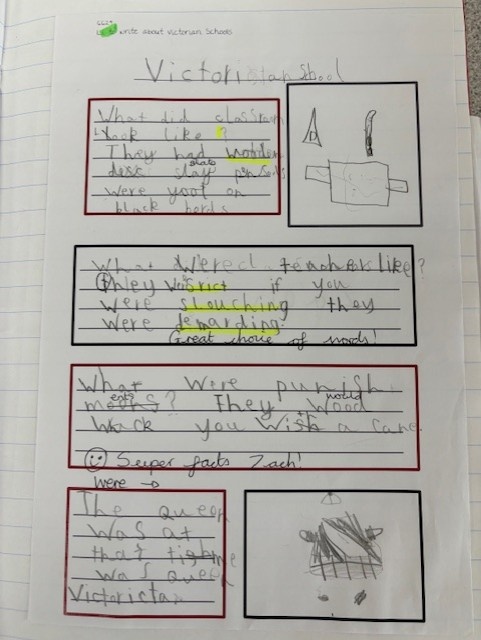
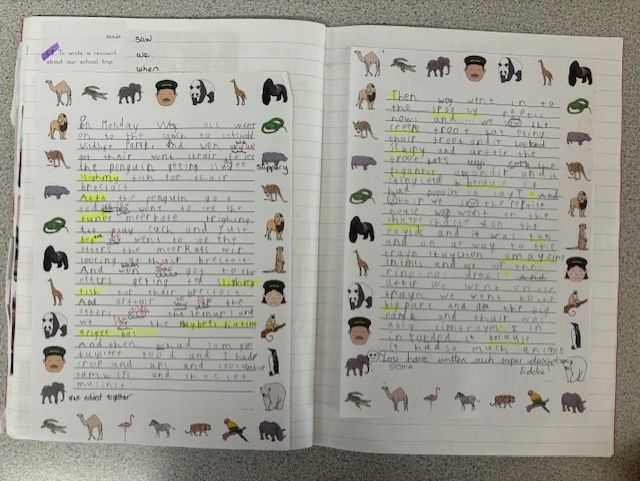
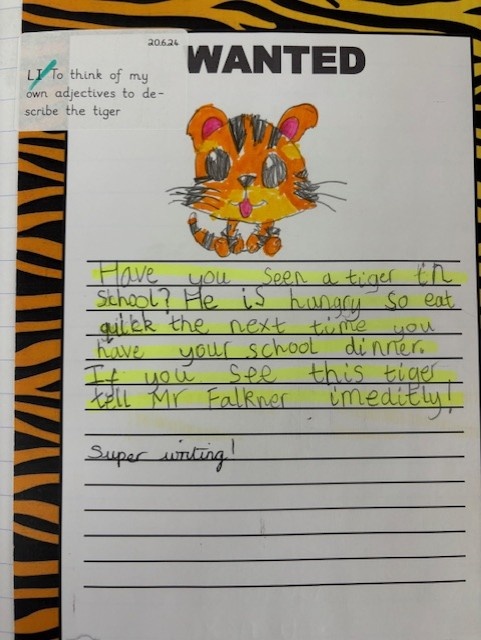
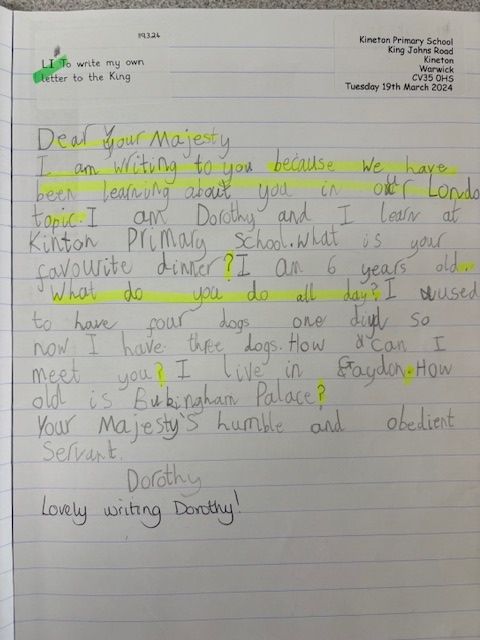
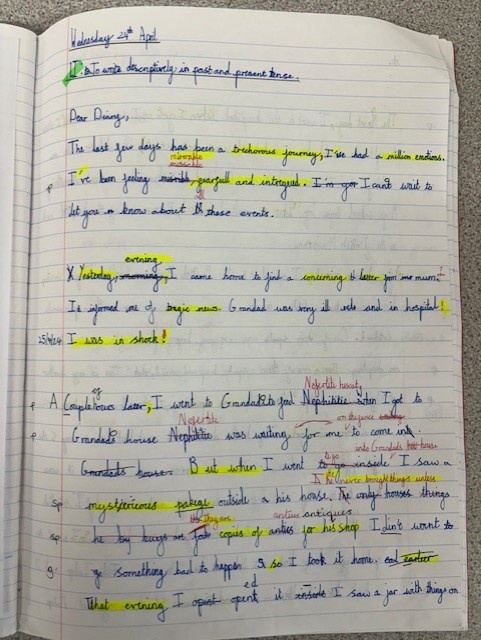
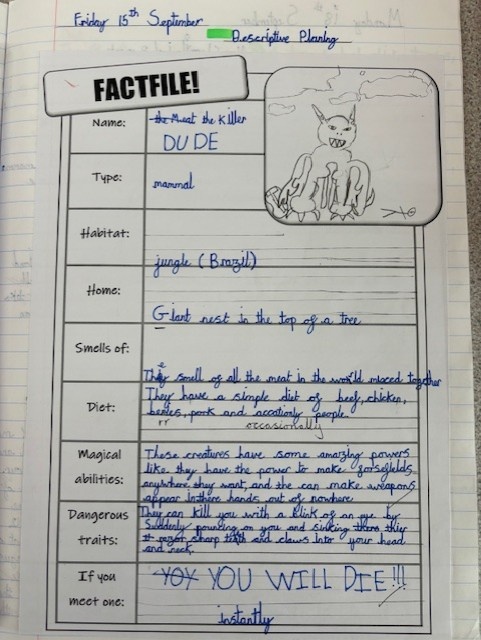
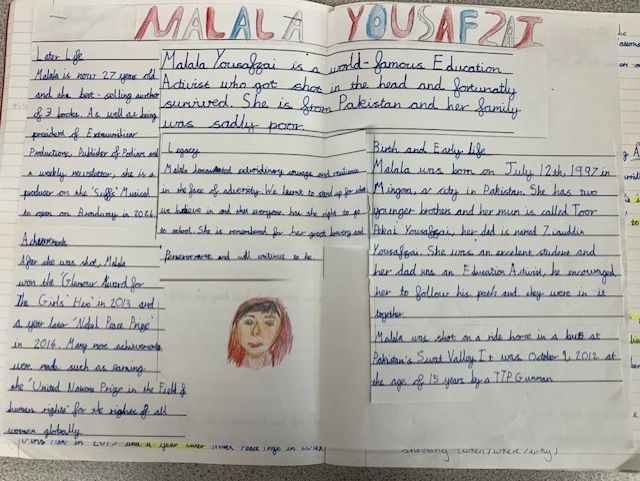
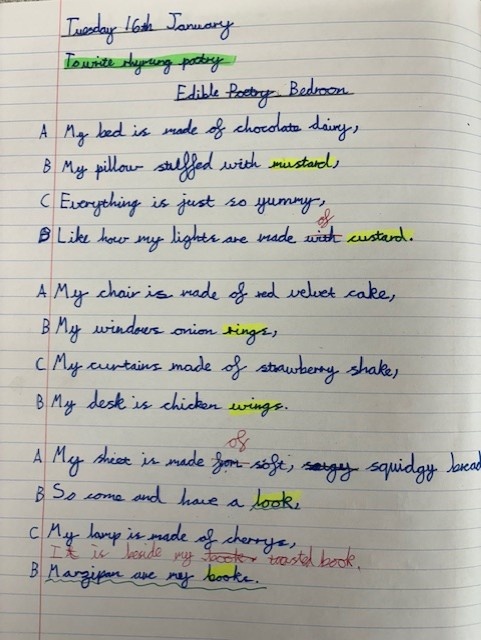
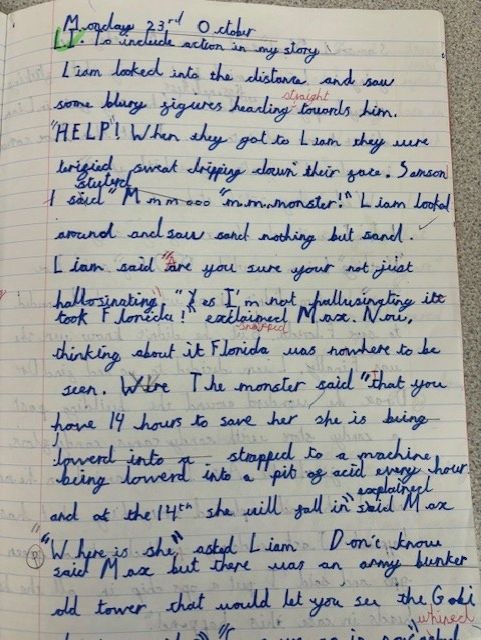
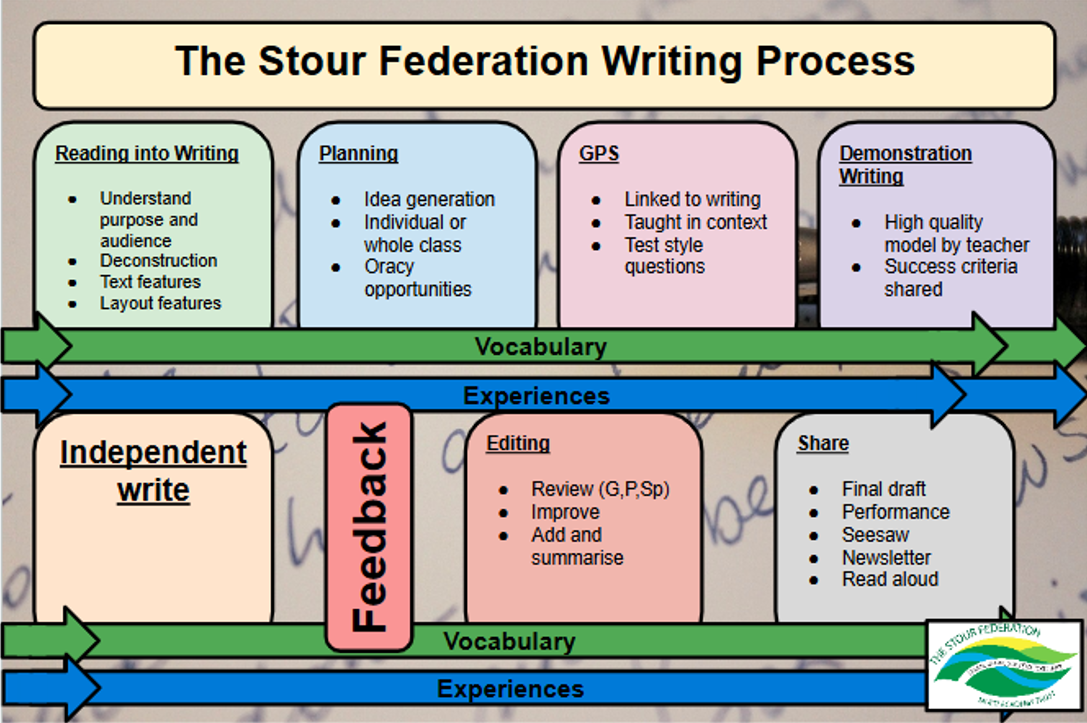
It is expected that children will be given many exciting opportunities to use and apply their writing skills across all text types and across the whole curriculum. Teachers plan for this accordingly using The Stour Federation Writing Process (below).
Place Value of Punctuation and Grammar
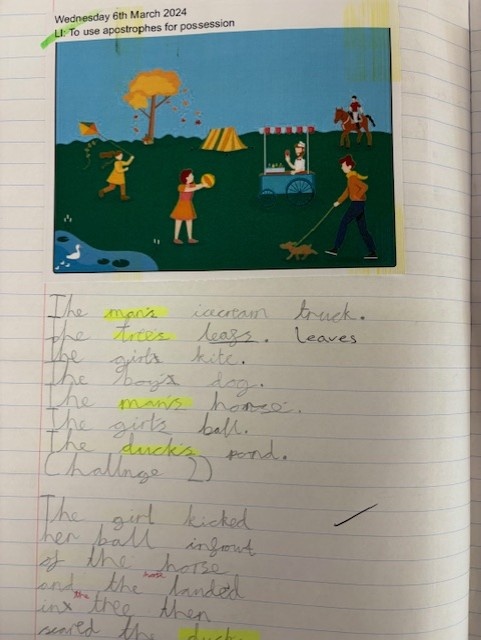
Launched at KPS in 2024, children begin each year with high-quality, focussed learning on sentence structure, syntax, punctuation and grammar. This supports the children with understanding the essential fundamentals of the technical aspects of writing. This understanding of word and sentence level grammar then provides a solid foundation, on which children can spend the year crafting a wide range of pieces of writing.
Vocabulary
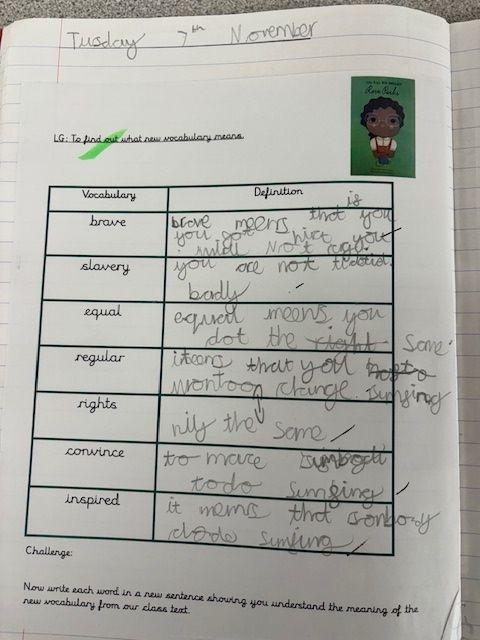
Vocabulary underpins our curriculum and it is at the heart of every subject we teach. Although we recognise that reading is invaluable for learning new language, we cannot assume that the more words you read, the more words you know. In The Stour Federation, we teach vocabulary explicitly and then revisit and revise words learned. This way, the children know the words in depth - meaning that they can use them in a variety of contexts, in writing, speaking and reading.
Spelling
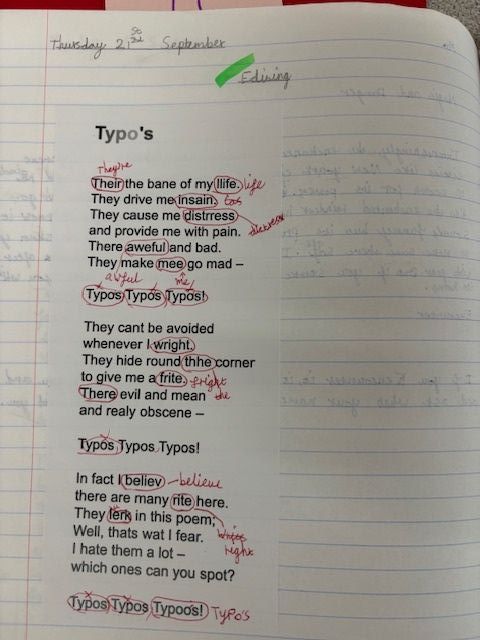
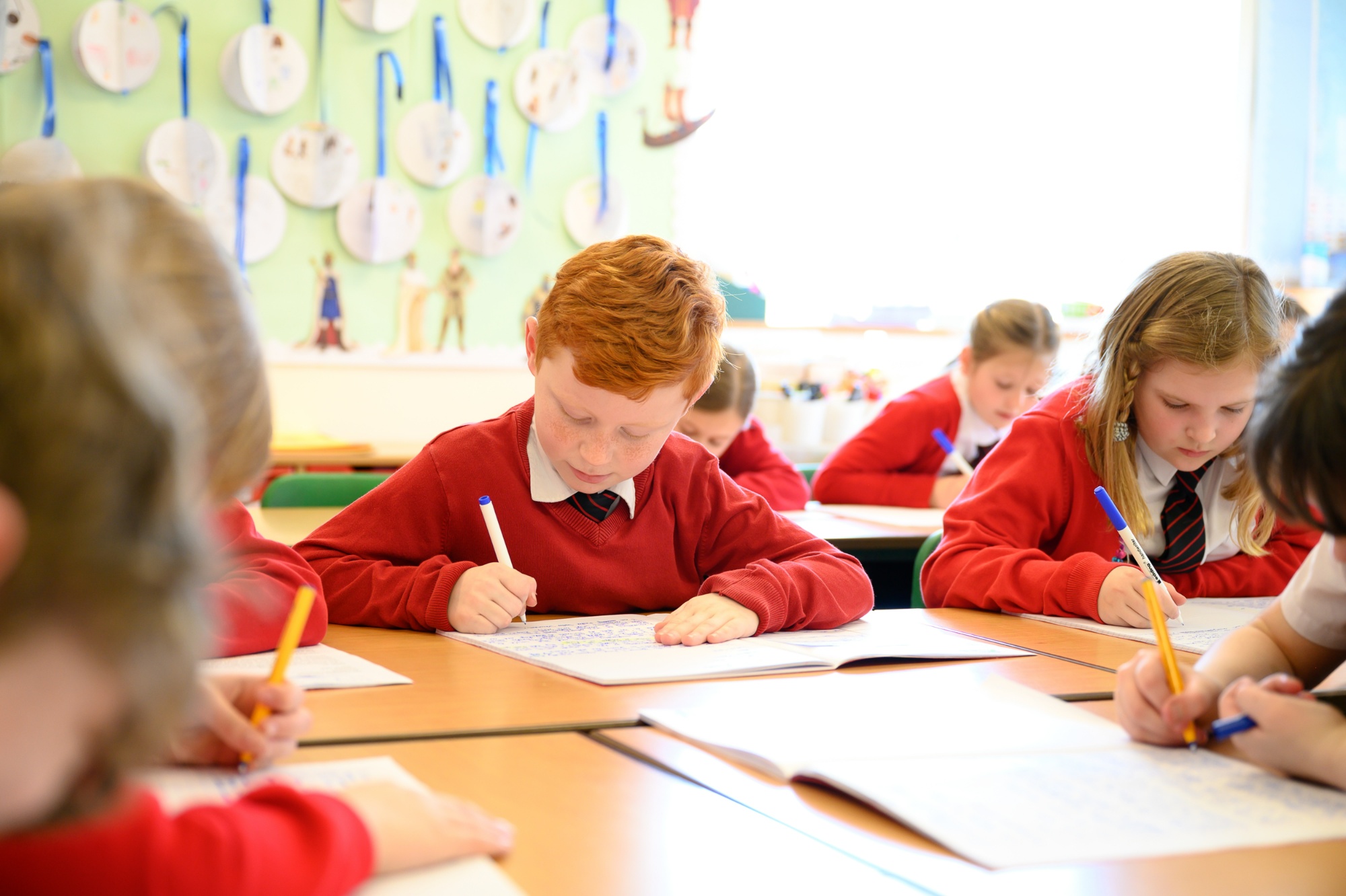
From Year 2 to Year 6, we teach spelling through ensuring that children know how words are built, rather than teaching them to memorise a list of 10 words. We focus on etymology and morphology, which means understanding where words come from and how words are made up of smaller parts called morphemes, such as:
- Base – the core part of a word that carries meaning (e.g. help, move, play)
- Affix – a morpheme that is either a prefix or a suffix
- Prefix – a part added before the base to change its meaning (e.g. un-, re-, mis-)
- Suffix – a part added after the base to change its form or meaning (e.g. -ed, -ing, -ful, -ness)
- Stem – a word part that includes a base and may also contain other morphemes (e.g. lovely, dangerous, laziness)
An exciting way of practising spelling at home is by using the Morphs app. Your child has their log in details in their learning log. Children should also practise in their spelling jotters.
Common Exception Words
Alongside morphemes and spelling rules, children learn Common Exception Words. These are words which can be tricky for children to learn as they do not follow spelling rules and cannot be sounded out. These words are tested at least termly and children should practise them at home as often as possible.
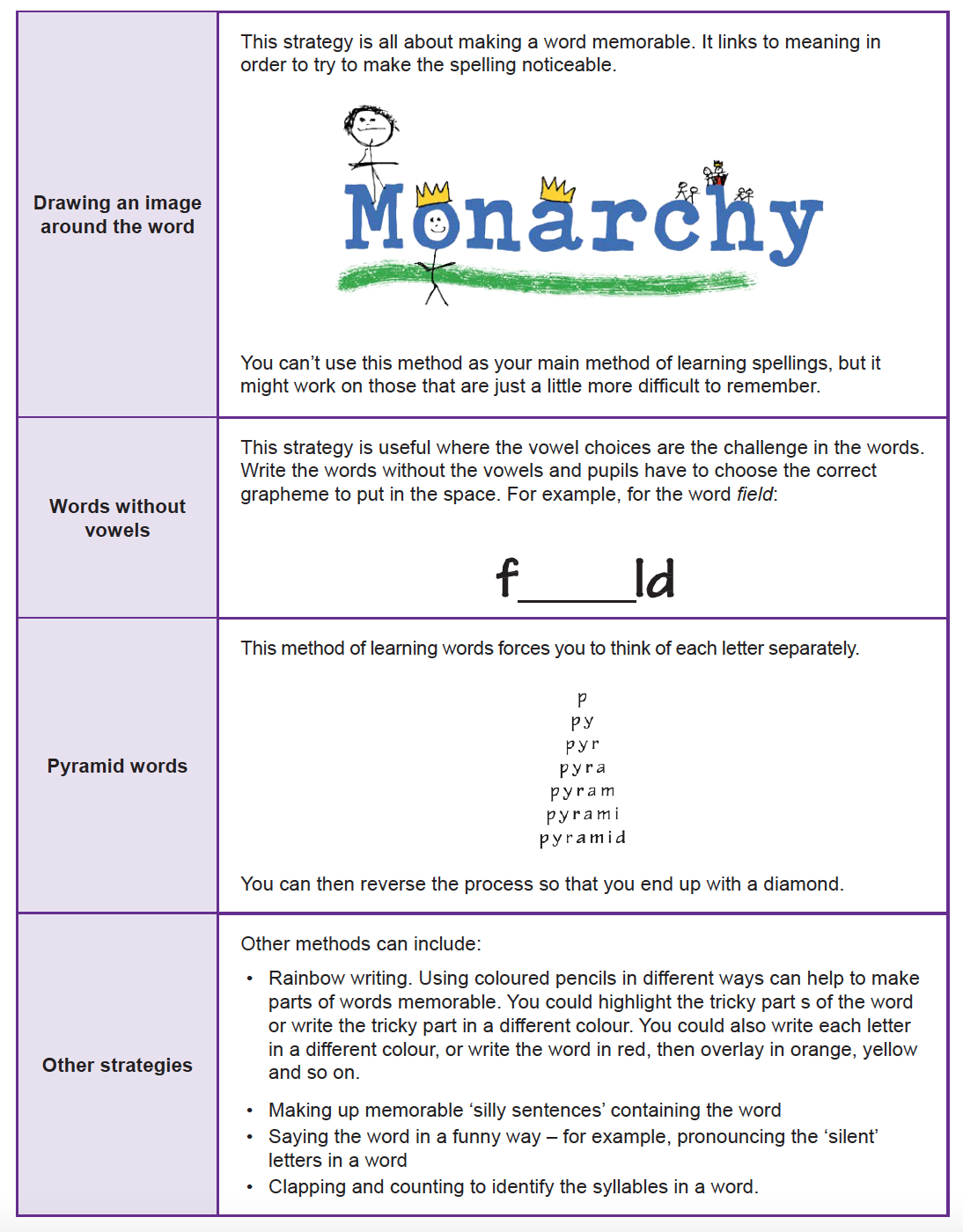
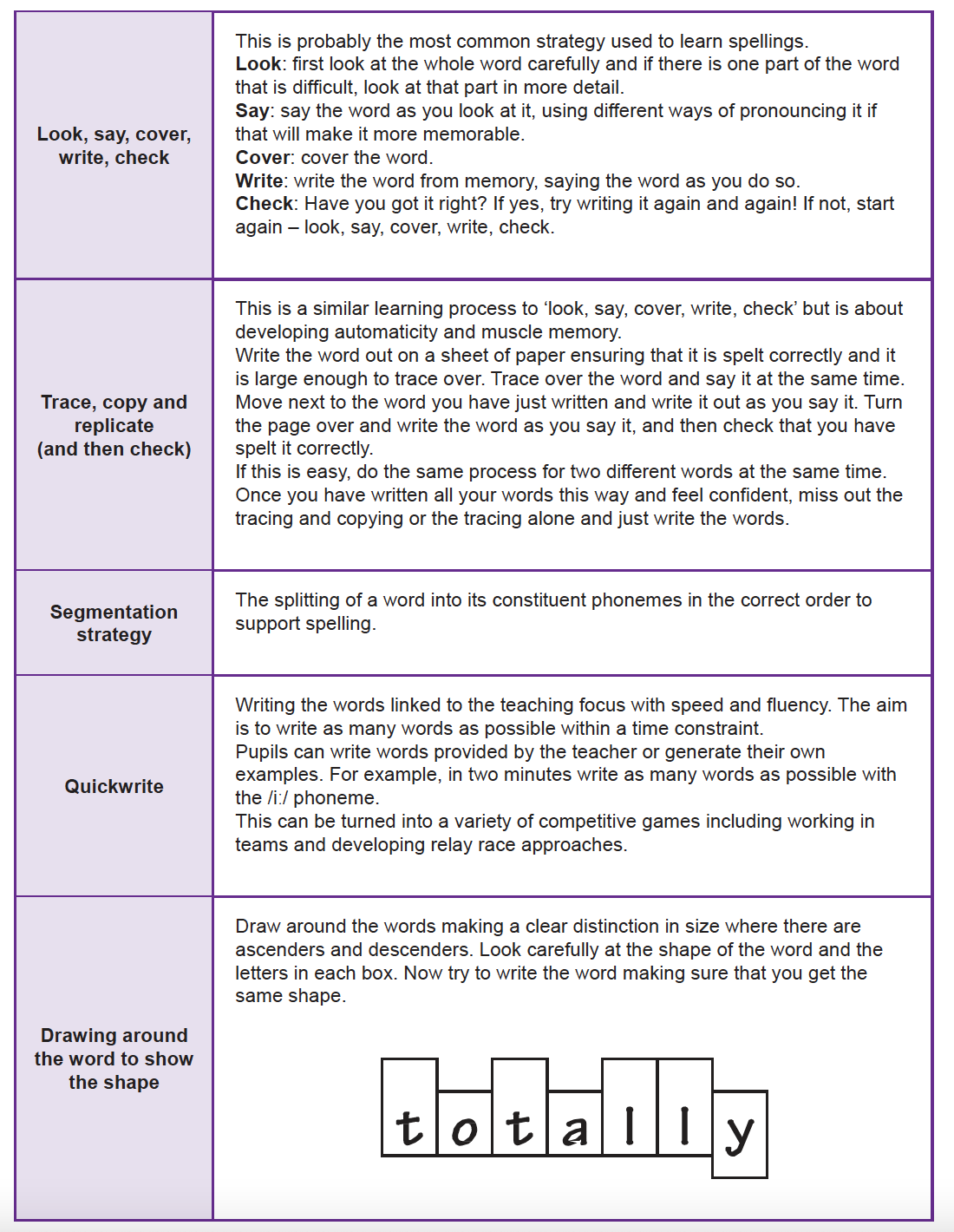
There is a section in the back of the learning log, which provides a range of different techniques for practising spellings.
Handwriting
Children begin learning skills which are fundamental to handwriting as soon as they begin school. In Reception class, children spend autumn term completing Dough Disco and Squiggle While You Wiggle, both of which help children to develop the gross and fine motor skills required for forming letters and associated writing skills.
Children have handwriting lessons throughout their school journey, where they are taught to form printed letters, and later (in Years 1 and 2) how to form continuous cursive letters. Legible writing that can be produced comfortably, at speed and with little conscious effort allows a child to attend to the higher-level aspects of writing composition and content.
Children can access the LetterJoin app at home to further support their handwriting progress.